KD2Lab at Karlsruhe Institute of Technology (KIT)
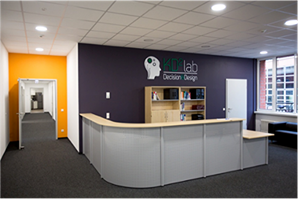
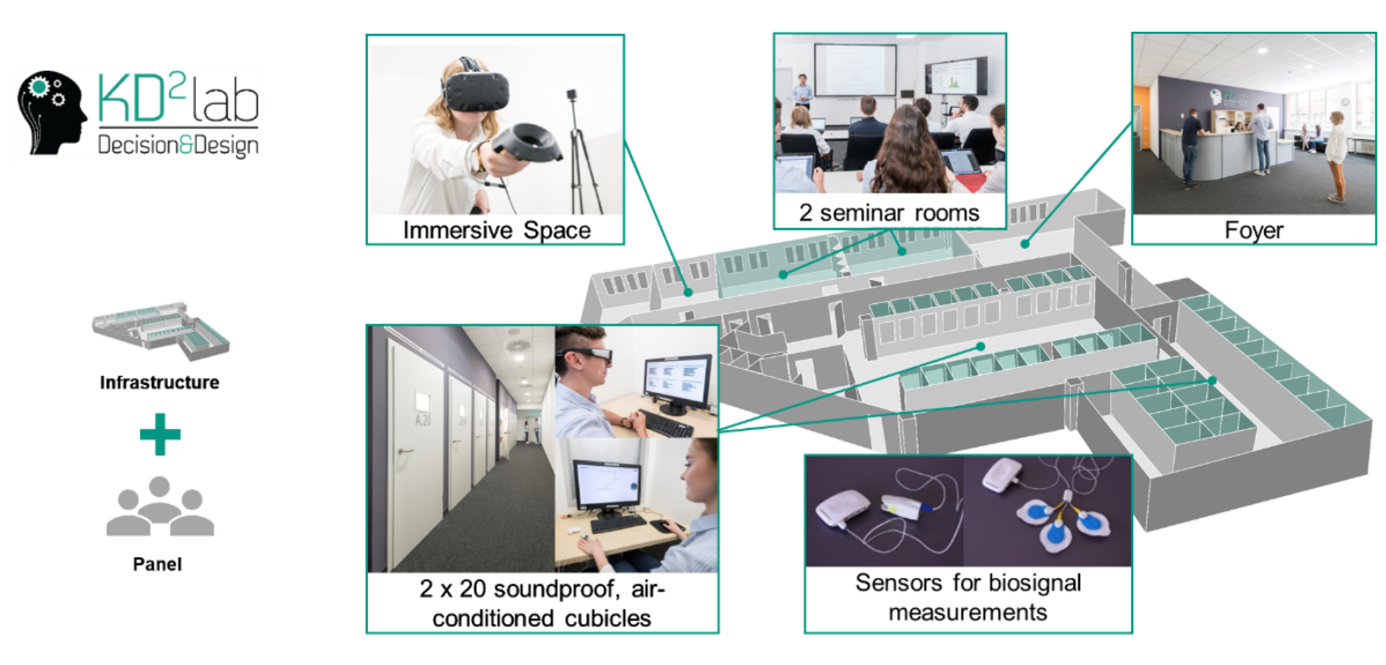
The Karlsruhe Decision and Design Lab (KD²Lab) at KIT is one of the world’s largest infrastructures for research on human behavior and decision-making, offering a highly controlled setting and advanced sensor technology for rigorous, interdisciplinary experiments.
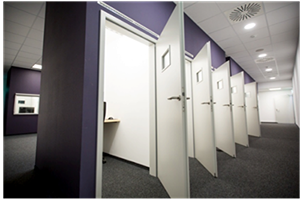
The KD²Lab was established with the support of the DFG Major Instrumentation Initiative (INST 121384/11-1 FUGG). The KD²Lab features—among other things—40 laboratory booths, 40 laptops, a server and network system connecting the laptops, and 40 devices for recording biosignals.
The KD²Lab enables the undisturbed observation of both individuals and teams—provided the subjects have full knowledge of and consent to the process—whether they are situated in mutually shielded and soundproofed individual booths or in dedicated team rooms. Thanks to its specific equipment, the KD²Lab is particularly well-suited for interdisciplinary studies, such as those required within the framework of the KD²School.
Further information: https://www.kd2lab.kit.edu/
Biosignals Lab at University of Bremen
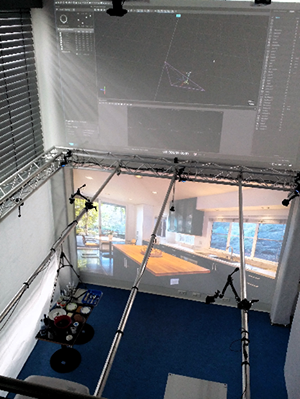
The Biosignals Lab (see Figure) at the Cognitive Systems Lab (CSL) consists of an interaction space (5x4m) which allows to blend real with virtual reality interactions. The Biosignals lab is fully equipped with a range of sensory devices to capture biosignals resulting from human behaviour like speech, motion, eye gaze, muscle and brain activities under both controlled and less restricted open-space conditions.
It enables the recording of a wide range of biosignals emitted by humans during cognitive, social, and motor activities. For these recordings, users may choose between a sound- and radiation-shielded booth or a 5x4-meter interaction area - the latter of which
facilitates the fusion of virtual and real-world environments. A variety of devices and sensors are available for capturing biosignals, including AR/VR headsets. Additional resources include high-density and mobile EEG systems, fNIRS, eye trackers (Pupil Labs), and depth cameras (RealSense D435), among others.
Further information: https://www.uni-bremen.de/en/csl/research/biosignalslab
Magnetic Resonance Imaging (MRI) Scanners in Bremen and Oldenburg
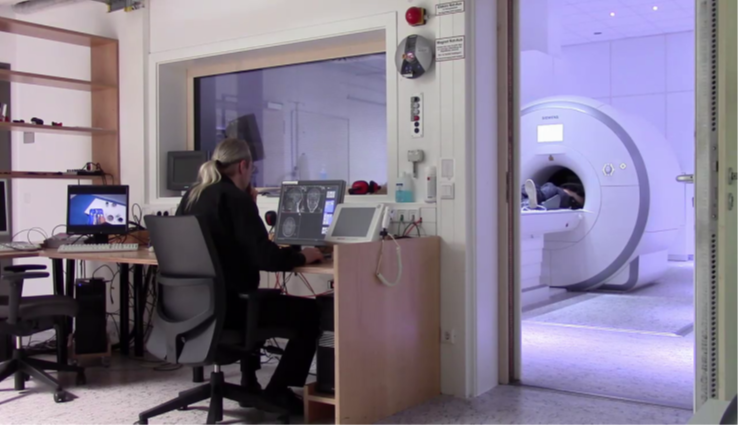
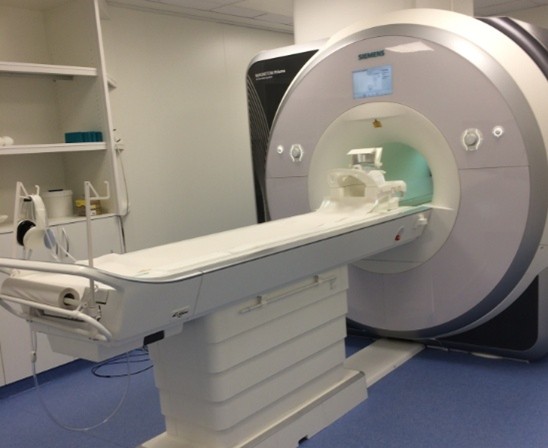
In Bremen and Oldenburg, within the context of experimental psychology and neuroscience, various laboratories for imaging (Magnetic Resonance Imaging—MRI; Magnetoencephalography—MEG) and high-resolution electrophysiology (EEG)—as well as mobile EEG and fNIRS systems—are additionally available to KD²School doctoral students.
Further information: https://uol.de/en/neuroimaging/grossgeraete/mrt